
Measure 26-261
What is it?
It’s a five year levy, funding the Oregon Historical Society (OHS) Library, Museum, and Educational programs.
The levy is $0.05 per $1,000 of assessed value on your property tax. For the median homeowner, that ends up being ~$13 per year, give or take, which nets the OHS ~$4M a year, roughly 30% of their total budget.
On your property tax statement, you’ll see how much you pay under this line item:
MULT CO HIST SOCIETY LOC OPT
Quick primer on the Oregon Historical Society:
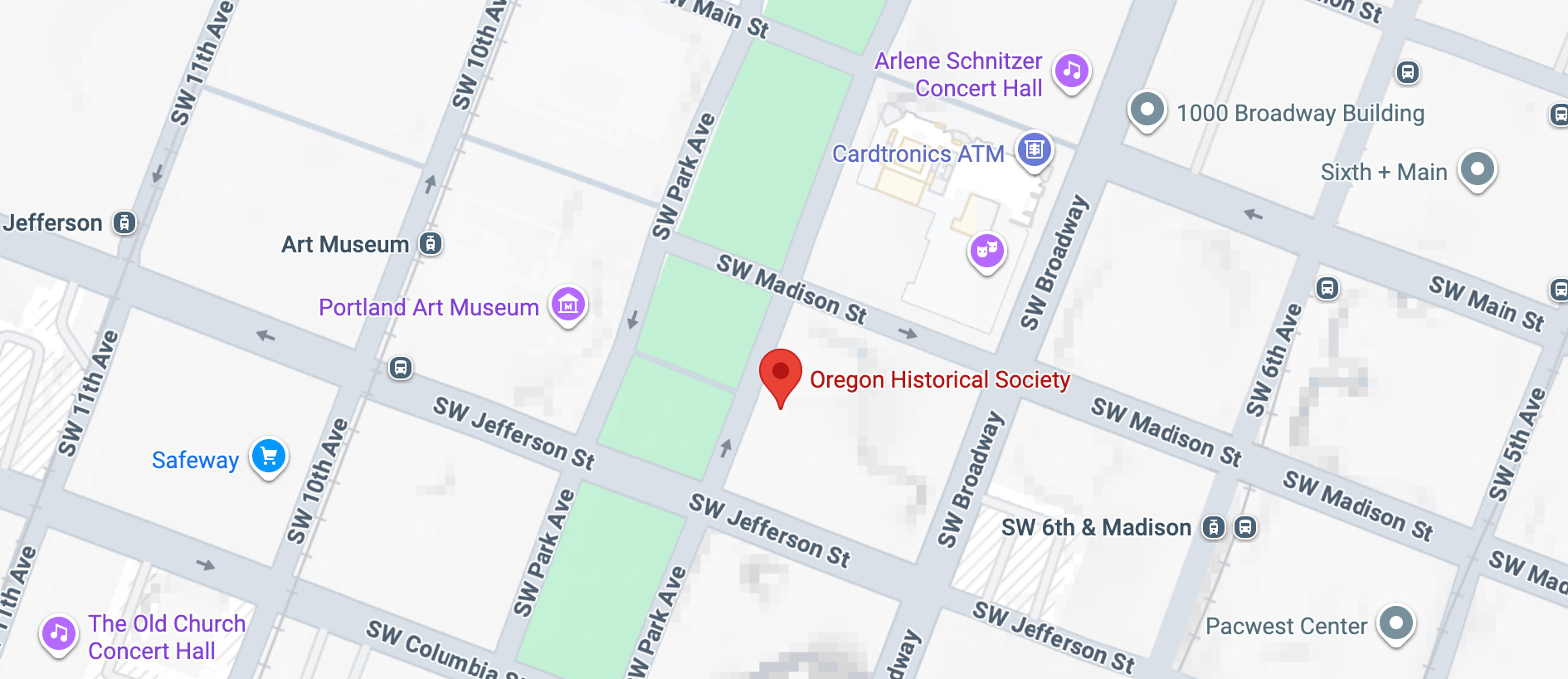
Museum: The thing most people think about when they think about the OHS. It’s literally, the Oregon Historical Society Museum on the Park blocks across from the Portland Art Museum. Three floors of permanent and rotating collections. Open seven days a week (10am - 5pm; noon - 5pm on Sunday). $14 admission for adults, free for Multnomah County residents (thanks to this levy)
Library: unheralded, but arguably the most important part of OHS, this holds the world’s largest collection of Oregon-related stuff. Manuscripts, photographs, maps, personal papers, etc. Free to use, and I imagine great if you’re a historian, journalist, genealogist, or someone who otherwise needs access to Oregon-related ephemera. (It’s part of the same building as the museum but you sign in at the front desk and go to a different floor.)
Education Programs: mostly, but not entirely, programs, tours, and free admission for K-12 students. This also includes curriculum development, classroom resources, the Oregon Encyclopedia, a lecture series, and some other stuff.
Why is it on the ballot?
This is the fourth time the OHS levy has been on the ballot.
The first time was in 2010, which, let’s be honest, was 100% a bailout. The OHS had been struggling through the 2000s, with financial difficulties, churn through multiple executive directors, layoffs, and more. They received some temporary funds from the State in 2007 and 2011 to help stabilize operations.
Between the 2010 levy, the 2011 state money, and a new Executive Director in 2011 (Kerry Tymchuk), the OHS found their footing and has since been pretty stable.
Voters renewed the levy in 2016 and 2021 with increasing margins each time. It’s now up for a fourth time.
Like previous years, it’s a five year levy and the rate has continued to stay consistent over its life (5 cents per $1,000 in assessed value). Assessed home values gradually rise year over year, which means voter funds to the OHS have risen in nominal terms (raw dollars) over the last 15 years. However, in real terms (i.e. adjusted for inflation), the levy’s purchasing power for OHS has slightly eroded over that same time frame.
Diving down some rabbit holes
For such a simple levy, I kept finding interesting nuggets to tug at.
The funding model is weird
A local, reoccurring levy to fund regular operations is not normal, for a historical society or really most any public good of this form (museums, zoos, etc.)
What would be a normal funding model?
Private non-profit — usually this is a mix of gate revenue (ticket sales) and private philanthropy. Good examples here would be both the Portland Art Museum, and OMSI.
State Agency — Most states’ historical societies are actually state agencies or state trustees, where the state appropriates money from their budget to support ongoing operations. Washington, Colorado, and Idaho all work like this.
The Oregon Zoo is kind of a hybrid of the above, but is probably closer to “state trustee”. A lot of their funding comes from gate revenue but money also is appropriated out of Metro’s general fund. They do receive capital investments money from bonds / levies, but this is not uncommon. They don’t receive operations funding through their bond.
OHS is based in Multnomah County but its charter is statewide. The math here gets a bit complicated but I would argue this funding model is more regressive than other local rags think.
Accountability isn’t there
All those other state trustee agencies? The state gets a say! Quite directly, they appoint members to the organizations’ boards, usually about half of the board.
Not so with the OHS. OHS is a 501(c)(3) nonprofit dating to 1898. The board is self-perpetuating where trustees nominate trustees. Trustees are volunteers, and they are ratified during OHS’ annual membership meeting. Multnomah county has zero seats on the board. Neither does the state of Oregon.1
What we do have is the “Levy Oversight Committee,” which exists to ensure our levy is being well spent. The LOC meets twice a year. I don’t have transcripts from most of the meetings but I skimmed the one for Dec. 2024, as well as the minutes for several other meetings. There are a lot of status updates, but folks do ask tough questions. Yet, even they seem to recognize they can’t do much if they don’t like the answers.
To quote Bill Bennetts (LOC member) directly:
I don't think this committee has any real power. All we can do is encourage more money going to the smaller organizations.
He’s right. The OHS can simply do what they want with our money. An opportunity for misaligned incentives.
And yet… OHS appears decently well-run, financially
Prior to the first levy, OHS was clearly in crisis. I don’t know if it was the money or the new Executive Director who steadied the ship. Based on my experience with non-profits, I’m inclined to credit the leadership, though certainly the additional funds made the job a heck of a lot easier.
I feel like many times when I deep dive on a bureau or institution, I find some skeletons in the closet. But OHS? They seem to be spending our money (mostly) responsibly. Their audits have come back clean and their financials look ok.
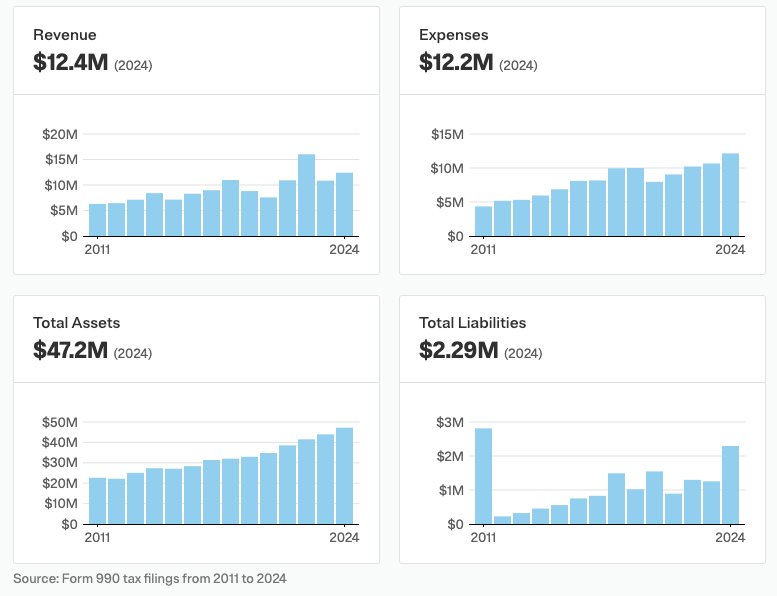
In the ~15 years since the levy began, revenue has outpaced expenses, net assets have doubled. Pretty solid!
On the mission side, it’s quite a bit less convincing
In advance of this piece, I visited the OHS, for the first time in over a decade. I thought it professional and well laid out. I learned a few things. It was… fine? But I can’t say I’m looking to make a return trip, despite the fact that it’s free for me. I’m hesitant to draw conclusions from my own experience, though, so I looked at the numbers, in a very obvious place
The 2021 ballot measure language:
Approximately 70,000 visitors use these facilities a year, including about 8,000 schoolchildren
The 2026 ballot measure language:
Each year, approximately 40,000 people visit OHS’s Portland facilities, including about 5,000 schoolchildren.
I know downtown Portland has had a rough go in terms of foot traffic, but a 40% decline is something to be concerned about. This may be an artifact of covid or any number of other factors so it’s not a total red flag but it’s a real concern.
Moreover, it’s a concern I haven’t seen addressed by OHS leadership nor a question I’ve seen asked (at least publicly), by the Levy Oversight Committee. Again, a moment where I worry about (the lack of) accountability.
How am I voting?
The case for is pretty straightforward: the OHS is a shared good, a cultural institution, and the organization has been responsible for our money. Oregon has a messy history and the OHS, via the levy, makes that history accessible for us all. In short: it’s 13 bucks. Less than a food cart sandwich these days. Every time the levy comes up, more people vote for it2. History is good for the soul; just pay the damn thing.
The case against is a little more structural: funding models, accountability, and so forth.
I was legitimately on the fence until this mailer graced my stoop:
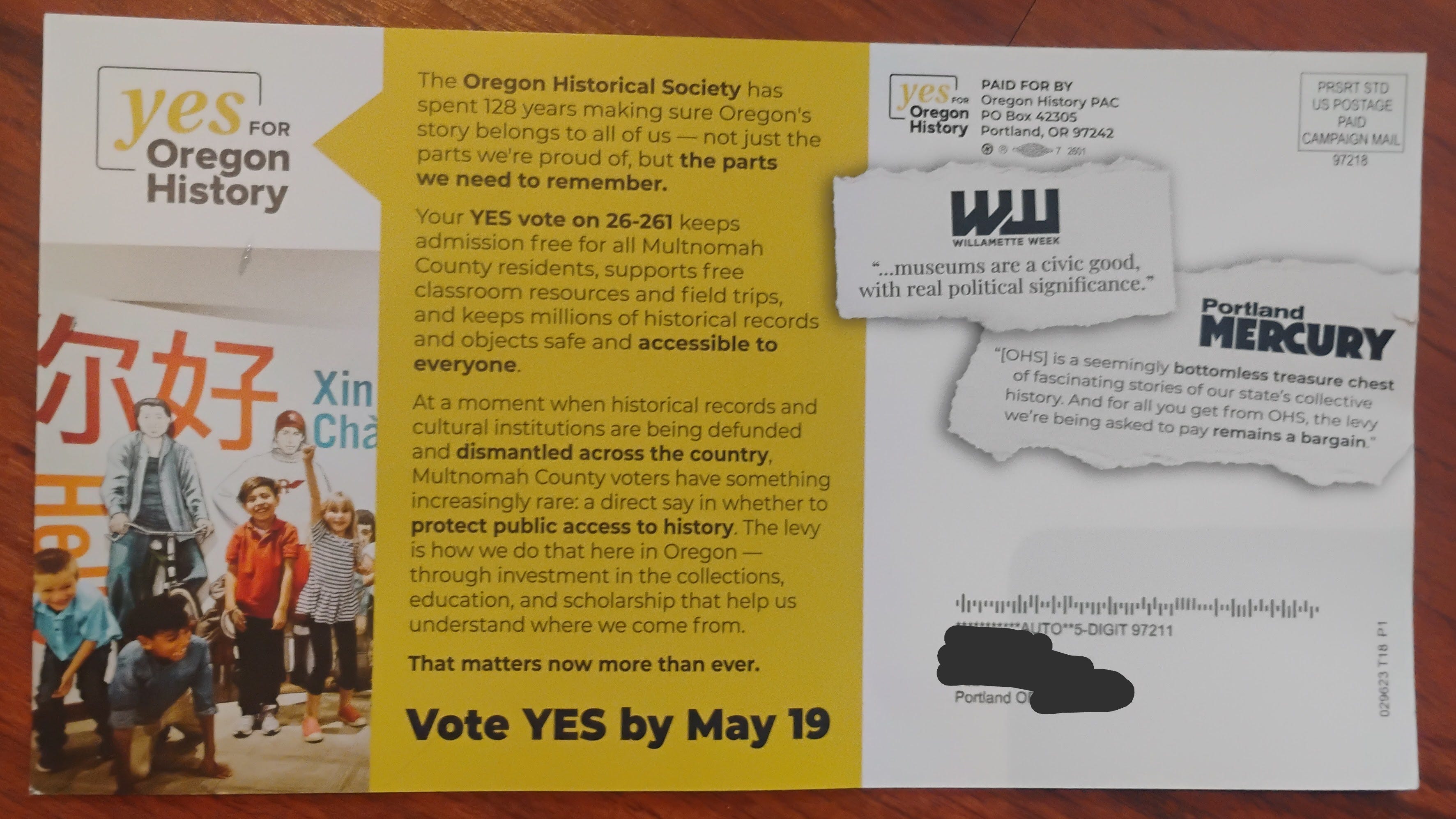
The eagle-eyed reader will notice it’s paid for by Oregon History PAC. Who funds the Oregon History PAC? It’s entirely funded by the Oregon Historical Society! If my math is right, ~$65k for the 2021 levy cycle, ~$50k for the 2026 cycle. No grassroots or philanthropic backing at all.
So a taxpayer-funded organization is paying the equivalent of an Associate Curator’s salary… to run a campaign… to renew its tax-payer funds.
That’s not a crime. It’s not even that unusual. But the levy renewal passed with 71% of the vote in 2016, with 78% of the vote in 2021. What are we even doing here?
If Mortlandia has an ethos it’s probably something like:
Cities are generational projects, and we should think on generational timescales.
Structural change is hard, but necessary.
Everything has trade-offs, it’s best to be clear-eyed about them.
Let’s solve this structural problems before it becomes a crisis. OHS is well-capitalized right now. Let’s push them toward a better, more sustainable, more accountable model while they have the leadership in place equipped to navigate the transition. In the short term, that will mean MultCo residents paying full fare when they go. In the long term, it means OHS will have to partner with the state (like most other historical societies) or find more varied sources of private funding (like the art museum literally across the street).
I’m voting ‘No’ on Measure 26-261.
Follow up to a silly post-script
Predictions for Measure 120 (Gas Tax)
The Oregonian: No — confidence, 60%
Actual: No
Portland Mercury: Yes — confidence, 90%.
Actual: Yes
Willamette Week: Yes (but grumpily, with caveats) — confidence, 70%
Actual: No (but grumpily, with caveats)
Predictions for Measure 26-261 (Oregon Historical Society Levy)
The Oregonian: Yes — confidence, 90%
Actual: No
Portland Mercury: Yes — confidence, 95%
Actual: Yes
Willamette Week: Yes — confidence, 75%
Actual: Yes
Turns out I’ve poorly calibrated to the Oregonian’s editorial board.
The only statutory relationship I can find between OHS and the Sate of Oregon? ORS 358.018, in its entirety:
(1) The Oregon Historical Society shall advise the Department of Transportation on acquisition, development and operation of historic places.
(2) The Department of Transportation shall consider the advice of the Oregon Historical Society, particularly advice regarding the designation of historic buildings, sites and other historic places.
That’s it. I hope OHS and ODOT have a good relationship (sincerely, I do!) but that’s not exactly the language of accountability, in either direction
If my memory serves correctly, I did vote for it, all three times (2010, 2016, 2021)