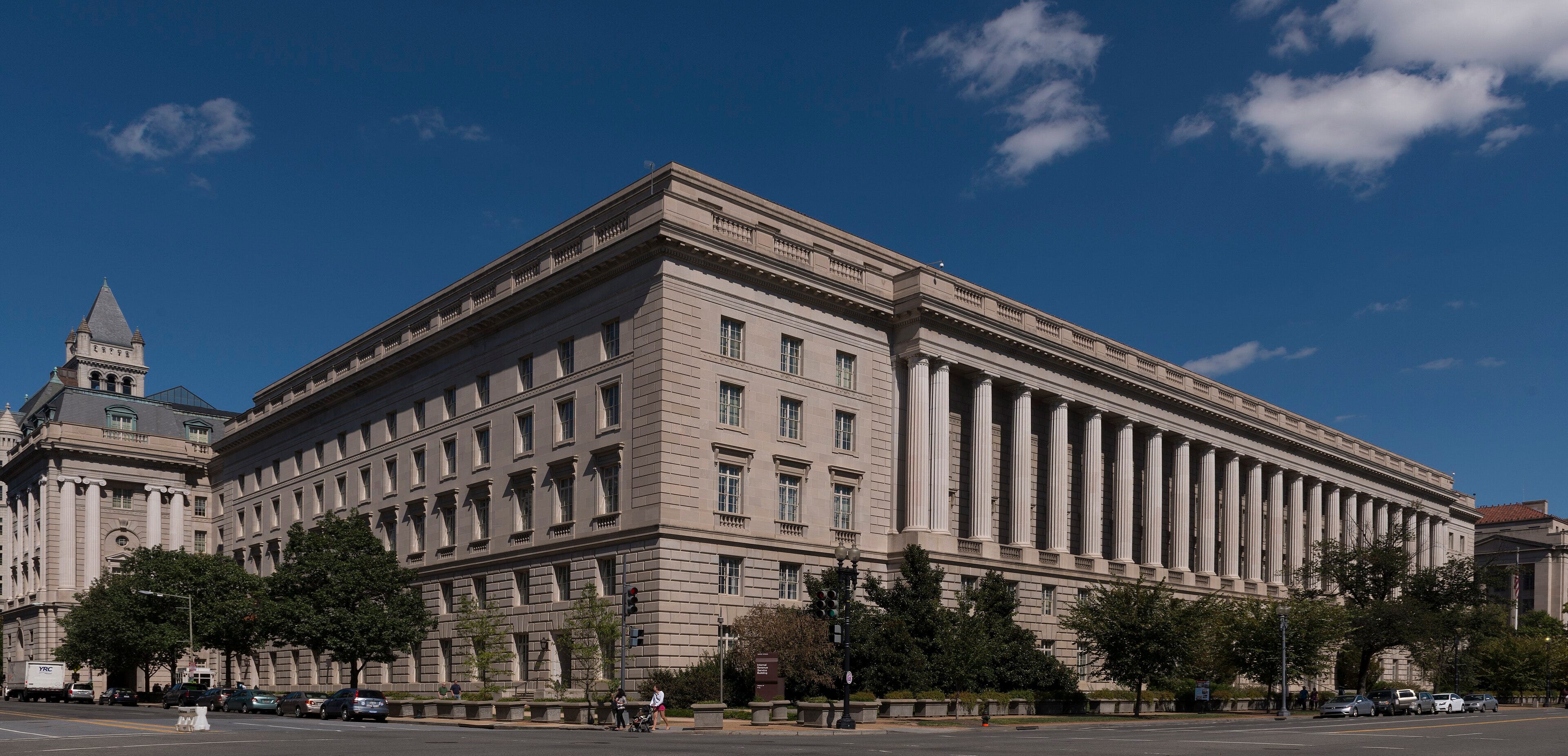

First and foremost, some housekeeping:
1:
Have you paid your arts tax? It’s due! You’ve got one hour to get it in!
I hope you’ve paid your other taxes too, of course. The official Mortlandia recommendation is to use Free Tax USA if your taxes are easy or an accountant (or perhaps Tax Act) if they are not. Because TurboTax and H&R Block are rent-seeker cancers on our society who helped kill IRS Direct File.
2:
It’s going to be a busy month or so for Mortlandia. Election Day is May 19th, just over a month away. Expect a bunch of posts incoming. Consider this an amuse bouche for the month to come. You’ve been warned.
For no reason, no reason at all, I’ve been thinking the last week or so about the Hague Invasion Act.1 Never heard of it? Don’t feel bad about that; it’s new to me too. The Hague Invasion Act is, in effect, law that prohibits us from assisting the Hague / the International Criminal Court if they try to charge US officials or servicemembers with war crimes. In the height of the Afghanistan war we just… opted out of international accountability. Instead we literally authorized the President to invade the Netherlands if they ever even tried to hold us accountable.
Call me a globalist cuck but this is a bad law. (Something folks said at the time2 and why folks have tried to repeal it a few times since.)
It’s not the only bad law that I’ve been thinking about lately. I’ve also been thinking about the Jones Act and the Renewable Fuel Standard (i.e. ethanol requirements). Without going into too much detail, these laws that increase the costs of both fuel and food, hitting poorest Americans the hardest.
The world would be better if these laws just… didn’t exist. If they were struck from the record, with a big red felt pen.
Thinking about these (bad) laws in these (troubled) times is a good exercise. As both a capital and lowercase liberal, the sort of person (me) who wants universal healthcare or climate action, it can be easy to say, “hey, there oughta be a law!” to prevent malfeasance. But sometimes the malfeasance is the law! To paraphrase social democrat / District 2 councilor Sameer Kanal, “It’s harder to do business in Portland than almost anywhere else” and “I’m not worried about businesses moving abroad but I am worried about businesses moving across the river or decamping to the suburbs.”
So on today, tax day, I thought it would be a good exercise for a left-leaning person like me to highlight local laws and regulations that we should just… be rid of. To use the right-leaning tool of the line-item veto to eliminate some regulatory capture and make things a little better. Reform is hard. It takes careful thought and new statutory language. But repeal? Repeal is just a matter of political will and the strikethrough tool.
State Board of Tax Practitioners
ORS 673.605–673.740 (Source)
What is it?
This one is topical! Oregon requires a separate state license for tax preparers, administered by a board composed of six licensed tax consultants and one member of the public.
What is the impact?
Preparers have to do 80 hours of course work, pay examination fees, license renewal fees, and various continuing education requirements. These costs are passed directly on to consumers, in the form of higher fees for tax prep and less competition due to fewer tax preparers (since anyone who doesn’t want to jump through these hoops simply won’t practice in Oregon).
Indeed, those costs are more burdensome on the smallest operators. It’s easy for the big guys to comply which further entrenches companies like H&R Block at the expense of small, local, artisanal tax preparers.
Case for repeal
The IRS already requires all paid preparers to hold a Preparer Tax Identification Number. Beyond that, Oregon is one of only a five3 with comparable state-level requirements. The other 45 states operate without and folks seem to get along filing their taxes just fine. This is regulatory capture wrapped up in the language of consumer protection.
Landscape Construction Professional licensing
ORS 671.510–671.760 (Source)
What is it?
Oregon requires separate licenses for both:
landscape construction professionals (the individual) and
landscape contracting businesses (the business)
for a broad range of landscape-construction work, including planning/installing new shrubs and trees, and irrigation work. The system includes exams, bonding, and substantial (at least $500,000) liability insurance requirements.
What is the impact?
It raises the costs of doing landscaping business and, again, these costs are passed directly on to the consumer through higher prices and reduced competition (especially for small operators). Oregon already distinguishes basic maintenance (e.g., mowing/edging) from licensed construction work, which means there’s already a license-free path for some work. But God forbid, as soon as you plant a couple of new trees…
Case for repeal
There might be some argument for the insurance and consumer protection elements of licensing for projects with more structural elements. But given that 30+ other states don’t require it, I’m not terribly convinced. Existing general contractor licensing and consumer protection law should cover these needs adequately.
At minimum, we should eliminate the dual licensure and considerably narrow the scope of these licenses to the highest risk work (retaining walls, water features, and similar high-liability projects). But I’d be willing to strike it all.
Oregon Certificate of Need laws
ORS 442.315 (Source), specifically OAR 333-570 (Source)
What is it?
In Oregon, opening a new hospital or adding new skilled nursing care beds typically requires state approval through the Certificate of Need (CON) process. As I understand it, CON laws were federally mandated in the '70s to control Medicare-driven overbuilding; but that rationale collapsed as the federal mandates were sunset in subsequent years. Nonetheless, Oregon kept the structure.
Under Oregon’s process, “applicants and affected persons” may seek administrative review and contested-case proceedings before final decisions.
What is the impact?
In practice, the CON process gives incumbent providers a formal pathway to delay or oppose new entrants. In the most egregious example I could find, Legacy Health was able to block two new rehab facilities for four years. Meanwhile, Oregon has the second fewest rehabilitation beds per capita.
Case for repeal
It’s probably worth reassessing the CON law framework in its entirety4, as academic research shows they increase costs and narrow choice in healthcare. But before we even get there, the provision (OAR 333-570) that gives competitors an avenue to gum up applications of prospective competitors is particularly galling and should clearly get the axe.
You might be saying, “hey, these things seem small. Why bother? Who cares?”
When it comes to tax preparers, you’re probably right. (Hospital beds, on the other hand…)
Still, I think it’s instructive. There’s broad consensus that we have affordability problems, that permitting takes too long, and so forth. Things feel slow, expensive, stuck.
If you spend the time to dig in to figure out why, you’ll realize there’s no one thing. It’s death by a thousand cuts. To accept the status quo is to accept slow, expensive, stuck.
How do you eat an elephant? One bite at a time.
I’m just one guy, with a limited capacity for research. These are the three I’ve highlighted but there are a dozen more good candidates for repeal, and hundreds more for reform. I chose these three because they didn’t seem to have a particular political valence or a huge constituency. Just a few concentrated people benefitting and diffuse harms for everyone else.
But also, I’m just one guy, with a limited capacity for research. There’s nothing stopping our representatives from doing the exact same thing, at scale and better. They can just do things, in the next legislative session, to make incremental progress. Our job is merely to ask them to try.
Technically, the American Service Members’ Protection Act of 2002.
Credit to then-Senator Joe Biden who voted against it at the time. Demerit to Mortlandia-favorite and current Senator Ron Wyden, who voted for it.
California’s approach is quite similar to Oregon’s. New York, Maryland, and Connecticut also impose state-level tax preparer permit regimes though they’re not all as stringent as Oregon.
Minority leader Lucetta Elmer (R-McMinnville) has tried reform here to no avail (yet)